By the free-solarpanels.com editorial team Published August 19, 2026 Last reviewed August 22, 2026
$0-Down Solar in Florida: What "Free Solar Panels" Really Means (2026)
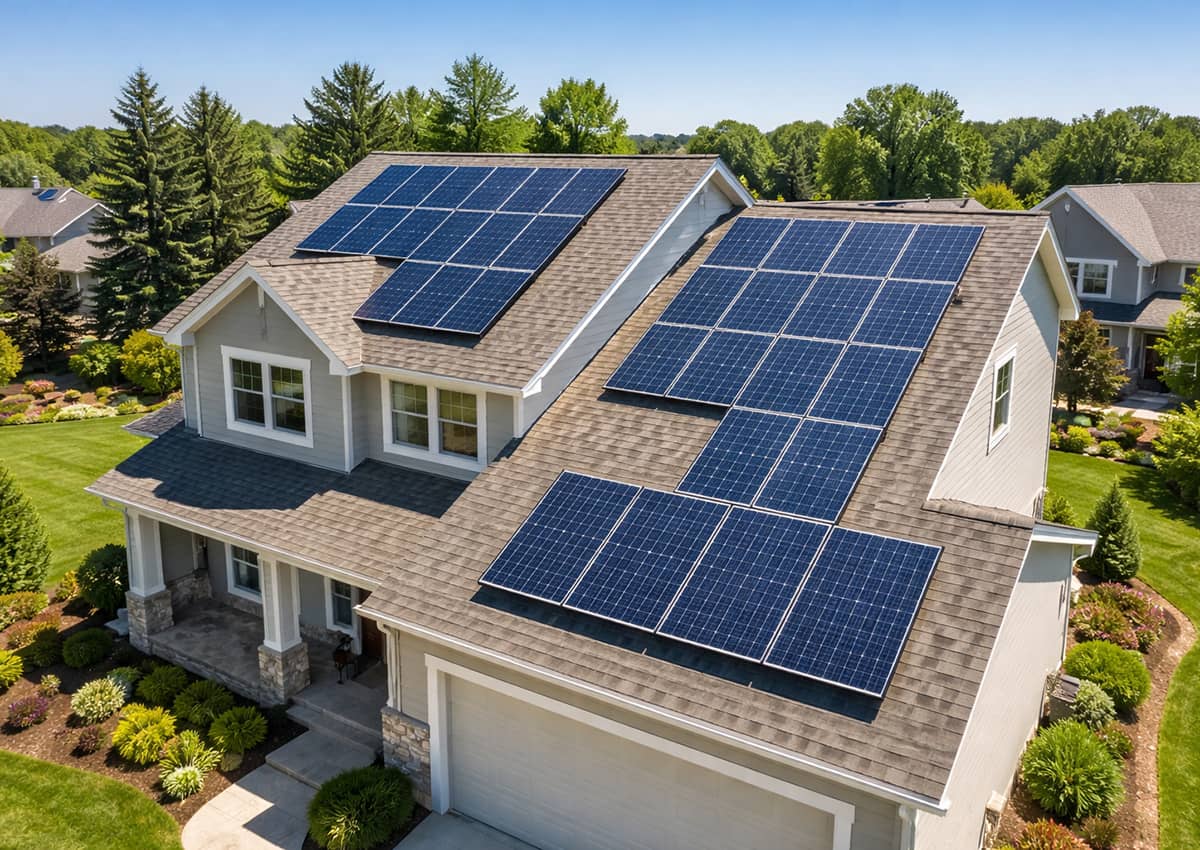
You've probably seen seen ads promising "free solar panels" in Florida, you're commonly investigating if it's too good to be true. The short answer: technically, yes. But the reality is commonly better than the hype suggests.
While no one is giving away solar panels for free, there are legitimate $0-down financing options that let you go solar without paying anything upfront. With Florida's Property tax exemption, your total upfront cost can be reduced, making solar accessible to more homeowners. Note that the 30% federal tax credit only applies if you lease or sign a PPA—not if you buy or finance the system.
In this full-scale guide, we'll break down exactly what "free solar" really means, the threelegitimate ways to go solar with $0 down, and how to avoid common pitfalls that could cost you thousands.
Check if you qualify for $0-down solar in Florida
Get matched with vetted local installers. No obligation, free personalized quotes.
Key Takeaways
- 1"Free solar panels" really means $0-down financing options like loans, leases, or PPAs—not truly free equipment.
- 2The 30% federal tax credit no longer applies if you own a solar system—it's only available through a lease or PPA, claimed by the provider.
- 3Solar loans let you own the system and qualify for any state incentives, while leases/PPAs pass through some value of the federal credit but offer minimal initial investment with less long-term savings.
- 4With electricity rates at $0.13/kWh in Florida, solar can become profitable in 7-11 years.
- 5Always compare quotes from multiple installers—prices can vary by 20-30% for the same system.
The Truth About "Free Solar Panels"
Let's correct a common misconception: no company is donating solar panels for free. The equipment, installation, permitting, and labor all cost money. When you see "free solar" advertised, they're commonly referring to one of three $0-down financing options.
Think of it like buying a car. You can pay cash, take out a loan, or lease it. With solar, you have comparable options—and some let you start saving money from day one without any upfront investment.
The three main ways to go solar with $0 down in Florida are:
- Solar Loans — You own the system and make monthly payments (commonly less than your current electric bill)
- Solar Leases — You rent the equipment for a fixed monthly payment
- Power Purchase Agreements (PPAs) — You buy the electricity the panels produce at a discounted rate
3 Legit $0-Down Solar Options Explained
1. Solar Loans
A solar loan works like any other home improvement loan. You borrow money to purchase the system, then pay it back over 5-25 years. You own the panels just like a cash purchase, so you don't qualify for the 30% federal tax credit—but you may still qualify for state or local programs.
In Florida, this means you can qualify for the state's Property tax exemption. Many homeowners find their monthly loan payment is less than what they were paying for electricity.
2. Solar Leases
With a solar lease, you don't own the panels—you rent them. A solar company installs the system on your roof and charges you a fixed monthly fee, typically for 15-25 years.
The upside: no maintenance worries, predictable payments, and the leasing company claims the 30% federal tax credit and typically passes some of that value to you through a lower rate. The downside: you don't own the system, and your long-term savings are usually lower than owning.
3. Power Purchase Agreements (PPAs)
A PPA is similar to a lease, but instead of paying a fixed monthly fee, you pay for the electricity the panels produce—usually at a rate 10-30% lower than your utility. It's like having a mini power company on your roof.
PPAs are popular in Florida because they're simple: you don't own anything, you just buy cheaper electricity, and the provider factors its 30% federal tax credit into that rate. Like leases, you just don't own the system or build equity in it.
What Affects Your Solar Savings in Florida
Your actual savings depend on several factors specific to your home and location in Florida:
- Electricity rates: At $0.13/kWh, Florida's rates are at the national average, making solar more attractive.
- Sun exposure: Florida averages 5.67 peak sun hours per day—exceptional for solar production.
- Roof condition: South-facing roofs with minimal shade produce the most energy.
- System size: Larger systems cost more but generate more savings over time.
- Net metering: Florida offers net metering, allowing you to sell excess energy back to the grid.
Common Pitfalls to Avoid
The solar industry has grown rapidly, and unfortunately, not every company operates ethically. Here's what to watch out for:
- High-pressure sales tactics: Legitimate installers don't pressure you into signing same-day. Take your time.
- Unrealistic savings promises: If it sounds too good to be true, it probably is. Get everything in writing.
- Hidden escalator clauses: Some PPAs and leases increase payments 2-3% annually. Read the fine print.
- Subpar equipment: Cheap panels may cost less upfront but produce less energy and have shorter warranties.
- Skipping the comparison step: Prices can vary 20-30% between installers for the same system. Always get multiple quotes.
How Our Installer Matching Works
We've partnered with a network of solar installers across Florida that apply through our installer vetting process. Verify current licensing, insurance, and claimed certifications independently before signing. Here's how matching works:
- Tell us about your home: Answer a few quick questions about your location, energy usage, and preferences.
- Get matched: We connect you with up to 3 top-rated installers in your area.
- Compare quotes: Each installer provides a custom proposal based on your specific situation.
- Choose with confidence: Pick the option that works best for you—no pressure, no obligation.
Our service is 100% free for homeowners. We're compensated by installers only when you decide to move forward, so there's no cost or risk to you.
Solar Loan vs Lease vs PPA: Quick Comparison
| Feature | Cash Purchase | Solar Loan | Lease or PPA |
|---|---|---|---|
| Who owns the system | You | You | The provider |
| Upfront cost | Full system cost | $0 | $0 |
| Federal tax credit | None (25D expired) | None (you own the system) | 30% via Section 48E, claimed by the provider and passed through as a lower rate |
| State/local incentives | Varies by provider and contract | ||
| Monthly payment | None | Loan payment, typically less than your electric bill | Fixed lease fee or per-kWh PPA rate |
| Long-term savings | Highest once paid off | High once paid off | Lower than owning, but no upfront cost |
Ready to see your savings potential?
Get a free, no-obligation quote from top-rated installers in Florida.
The Bottom Line
- "Free" solar panels aren't technically free, but $0-down options make solar accessible without upfront costs
- Florida homeowners may still save with state incentives and net metering, and can access the 30% federal tax credit indirectly through a solar lease or PPA
- Compare multiple quotes to find the best deal for your specific situation
Frequently Asked Questions
Sources & References
You May Also Like
Cost of Solar Panels in Florida
See current pricing, incentives, and ROI calculations.
Florida Solar Incentives
Federal and state tax credits, rebates, and programs.
Florida Solar Financing Options
Compare loans, leases, and PPAs to find the best fit.
Is Solar Worth It in Florida?
A detailed breakdown of pros, cons, and payback periods.
Top Solar Companies in Florida
Compare ratings, reviews, and pricing from local installers.
Florida Solar Guides
Browse every guide for costs, incentives, financing, and top companies.