
By the free-solarpanels.com editorial team Published August 19, 2026 Last reviewed August 22, 2026
Massachusetts Solar Financing Options: Loans, Leases & PPAs Compared (2026)
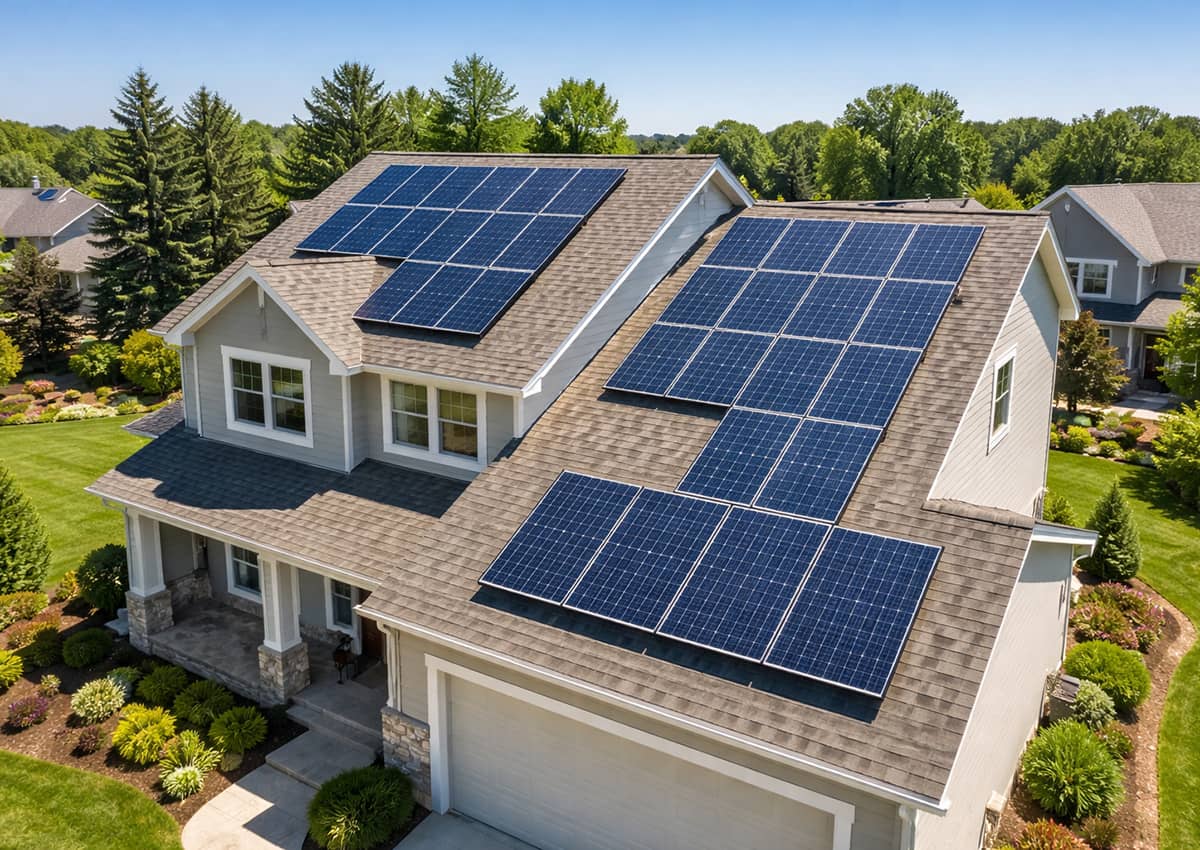
Going solar doesn't require paying $20-30k upfront. Most Massachusetts property owners pay for their solar systems through loans, leases, or Power Purchase Agreements (PPAs) —each with distinct pros and trade-offs.
Picking the right financing option is just as important as choosing the right solar installer. The wrong choice can cost you tens of thousands over your system's 25-year lifespan—and since the 30% federal credit now only reaches you through a lease or PPA, it directly affects which option makes financial sense.
In this thorough guide, we'll explain the three main solar financing options offered to Massachusetts property owners, show you concrete cost comparisons based on Massachusetts's power costs, and help you determine the best payment plan for your finances and long-term goals.
Check if you qualify for $0-down solar in Massachusetts
Get matched with vetted local installers. No obligation, free personalized quotes.
Key Takeaways
- 1Solar loans let you own the system just like a cash purchase, but the 30% federal tax credit no longer applies to systems you own—only Massachusetts"'"s state or local programs, if any, carry over.
- 2Solar leases offer predictable monthly payments (typically $200/month) with zero maintenance responsibility, and the provider takes the 30% federal credit and passes some value to you through a lower rate.
- 3PPAs let you pay for solar electricity at a lower rate (customarily 10-30% below utility rates) with no upfront cost, and the provider similarly claims the federal credit.
- 4Massachusetts property owners who purchase their systems can still save nearly $19k more over 25 years compared to renting, mainly by keeping 100% of the electricity savings rather than sharing them with a provider.
- 5Your credit score determines loan terms—scores exceeding 700 secure the best rates (4-6% APR).
Solar Financing Options in Massachusetts
Compare solar loans, leases, and PPAs to find the best payment plan for your budget and energy goals. Learn how to go solar with $0 down.
Going solar in Massachusetts is more affordable than ever thanks to flexible financing options. Whether you prefer to own your system outright with a solar loan, start saving immediately with a lease, or pay only for the power you use with a Power Purchase Agreement (PPA), there's a financing solution that fits your budget and goals. This guide breaks down each option with real numbers based on typical Massachusetts installations.
Solar Loans: Own Your System
Finance your purchase and keep 100% of the electricity savings
Example: 20-Year Solar Loan at 6.5% APR
System Cost After State Incentive
$23,000
Monthly Loan Payment
$172
Monthly Energy Savings
$235
Monthly Cash Flow
+$64
How Solar Loans Work
Solar loans function like home improvement loans or auto loans. You borrow money to purchase your solar system, then repay the loan over time (typically 10-25 years) with fixed monthly payments. You own the system from day one, which means you may qualify for state or local incentive programs in Massachusetts—but not the 30% federal tax credit, which no longer applies to systems you own.
Types of Solar Loans
- •Secured loans: Use your home as collateral, typically offering lower interest rates (4-7% APR). Interest may be tax-deductible if structured as a home equity loan or HELOC.
- •Unsecured loans: No collateral required, but interest rates are typically higher (6-10% APR). Faster approval and simpler process.
- •Dealer financing: Arranged through your solar installer. Often $0-down with competitive rates, but shop around to ensure you're getting the best deal.
Pros of Solar Loans
- ✓You own the system: All energy savings go directly to you, and your system adds value to your home.
- ✓State incentives: You may qualify for Massachusetts's state or local programs, though not the 30% federal tax credit, which no longer applies to systems you own.
- ✓Positive cash flow: In Massachusetts, your energy savings often exceed your monthly loan payment from day one.
- ✓Fixed payments: Your loan payment stays the same while utility rates continue to rise.
Cons of Solar Loans
- •Credit check required: You'll need good credit (typically 650+) to qualify for the best rates.
- •You're responsible for maintenance: As the owner, you pay for any repairs or replacements after the warranty period.
- •Interest costs: You'll pay interest on top of the system cost, though this is often offset by energy savings.
Solar Leases: Rent Your System
Start saving with no upfront cost or ownership responsibilities
Example: Typical Massachusetts Solar Lease
Estimated Current Bill
$235
Monthly Lease Payment
$200
Monthly Savings
$35
Upfront Cost
$0
How Solar Leases Work
With a solar lease, a solar company installs panels on your roof at no cost to you. You pay them a fixed monthly fee to use the system, typically 10-20% less than your current electric bill. The leasing company owns the system and maintains it. Lease terms typically run 20-25 years, with an option to buy the system, renew the lease, or have it removed at the end.
Pros of Solar Leases
- ✓$0 down: Start saving immediately with no upfront investment.
- ✓No maintenance worries: The leasing company handles all repairs, monitoring, and maintenance.
- ✓Predictable payments: Fixed monthly cost that's typically lower than your utility bill.
- ✓Performance guarantee: Most leases guarantee a certain level of production or compensate you if the system underperforms.
- ✓Indirect access to the federal credit: The leasing company claims the 30% federal tax credit under Section 48E and typically reflects some of that value in your rate—this is currently the only way a residential customer benefits from the 30% credit.
Cons of Solar Leases
- •You don't own the system: The provider, not you, claims the 30% federal tax credit (only some of that value reaches you as a lower rate), and the system doesn't add value to your home.
- •Lower long-term savings: Over 20 years, you'll save less compared to ownership through cash purchase or loan.
- •Escalator clauses: Many leases include annual rate increases (2-3%), reducing your savings over time.
- •Complicates home sales: You'll need to either buy out the lease, transfer it to the buyer, or have it removed before selling your home.
Power Purchase Agreements (PPAs)
Pay only for the solar power you actually use
Example: Typical Massachusetts Solar PPA
Current Electric Rate
$0.23/kWh
PPA Rate
$0.11/kWh
Monthly PPA Cost
$112
Monthly Savings
$123
How Solar PPAs Work
A Power Purchase Agreement (PPA) is similar to a lease, but instead of paying a fixed monthly fee, you pay for the actual electricity the solar system produces at a predetermined rate (typically $0.10-0.12/kWh in Massachusetts). This rate is usually lower than your utility's rate and is locked in for the contract term (typically 20-25 years). Like a lease, the solar company owns and maintains the system, and claims the 30% federal tax credit under Section 48E, which is factored into your rate.
Pros of Solar PPAs
- ✓$0 down: No upfront cost to start generating your own clean energy.
- ✓Pay for production only: Your bill varies based on how much solar power is generated, so you only pay for what you get.
- ✓Rate protection: Lock in a low electricity rate while utility prices continue rising (avg. 3-5% annually).
- ✓No maintenance: The PPA provider handles all system monitoring, repairs, and upkeep.
Cons of Solar PPAs
- •You don't own the system: The provider claims the federal tax credit and only passes through some of that value, and there's no increase in home value.
- •Less predictable bills: Your monthly payment fluctuates based on production, seasonal weather, and shading.
- •Rate escalators: Most PPAs include annual rate increases (1-3%), which reduce your long-term savings.
- •Not available everywhere: PPAs are regulated at the state level and aren't offered in all Massachusetts utility territories.
Side-by-Side Comparison
| Feature | Solar Loan | Solar Lease | Solar PPA |
|---|---|---|---|
| Upfront Cost | $0 down available | $0 | $0 |
| Ownership | You own | Company owns | Company owns |
| Monthly Payment | $172 | $200 | $112 |
| 30% Federal Credit | No (owned system) | Indirect, via provider | Indirect, via provider |
| State Incentives | May qualify | Provider-dependent | Provider-dependent |
| Maintenance | Your responsibility | Company handles | Company handles |
| Home Value | Increases | No impact | No impact |
| Long-term Savings | Highest | Moderate | Moderate |
Which Financing Option Is Right for You?
Choose a Solar Loan if:
- ✓You want to maximize long-term savings and build home equity
- ✓You have good credit and can qualify for favorable loan terms
- ✓You want to keep 100% of your electricity savings and qualify for any state incentives
- ✓You plan to stay in your home long enough to pay off the loan
Choose a Solar Lease if:
- ✓You want predictable monthly payments with no upfront cost
- ✓You don't want to worry about system maintenance or repairs
- ✓You value simplicity over maximum long-term savings
Choose a Solar PPA if:
- ✓You want to pay only for the solar power you actually use
- ✓You prefer a variable payment tied to production over fixed costs
- ✓You want protection from rising utility rates with no ownership commitment
- ✓PPAs are available in your Massachusetts utility territory
Important Considerations
Read the Fine Print
Before signing any financing agreement, carefully review all terms including escalator clauses, early termination fees, transfer policies, end-of-term options, and performance guarantees. Don't hesitate to ask questions or request clarification on anything you don't understand.
Compare Multiple Quotes
Different solar companies offer different financing terms and partnerships with various lenders. Get at least 3-5 quotes from reputable installers in Massachusetts to compare system sizes, equipment quality, warranties, and financing options. A lower monthly payment isn't always the best deal if the system quality or terms are inferior.
Consider Your Credit Score
Your credit score significantly impacts loan terms. Generally, you'll need a score of 650+ to qualify, with the best rates (4-6% APR) reserved for scores above 700. If your credit needs work, consider improving it before applying for solar financing to secure better terms.
Understand Escalator Clauses
Many leases and PPAs include annual rate increases of 1-3%, which can significantly reduce your long-term savings. For example, a 2.9% annual escalator means your payment or rate increases by that amount each year for the entire 20-25 year term. Calculate the total cost over the full contract period, not just year one.
Plan for Home Sales
If you have a lease or PPA and plan to sell your home, you'll need to either transfer the agreement to the buyer, buy out the contract, or have the system removed. Owned systems (purchased with cash or a loan) typically add value to your home and make sales easier. Discuss transfer policies upfront if you might move during the contract term.
Next Steps: Get Personalized Financing Quotes
The best way to compare financing options is to get customized quotes from multiple solar installers serving Massachusetts. Each installer works with different lenders and offers different terms, so comparing multiple proposals ensures you find the best financing solution for your budget and goals.
Compare Financing Options from Top Massachusetts Installers
Get free quotes with loan, lease, and PPA options. Compare rates, terms, and monthly payments with no obligation.
Takes 2 minutes • No credit check • 100% free
Disclaimer: This guide provides general information about solar financing options in Massachusetts. Actual financing terms, rates, availability, and savings vary based on your credit score, system size, energy usage, installer, and utility company. The calculations shown are estimates based on typical installations and may not reflect your specific situation. Always review loan documents, lease agreements, or PPA contracts carefully before signing, and consult with a financial advisor if needed. free-solarpanels.com is a lead generation service that connects consumers with solar installers. We do not provide financing or installation services directly.
Solar Loan vs Lease vs PPA: Quick Comparison
| Feature | Cash Purchase | Solar Loan | Lease or PPA |
|---|---|---|---|
| Who owns the system | You | You | The provider |
| Upfront cost | Full system cost | $0 | $0 |
| Federal tax credit | None (25D expired) | None (you own the system) | 30% via Section 48E, claimed by the provider and passed through as a lower rate |
| State/local incentives | Varies by provider and contract | ||
| Monthly payment | None | Loan payment, typically less than your electric bill | Fixed lease fee or per-kWh PPA rate |
| Long-term savings | Highest once paid off | High once paid off | Lower than owning, but no upfront cost |
Ready to see your savings potential?
Get a free, no-obligation quote from top-rated installers in Massachusetts.
The Bottom Line
- "Free" solar panels aren't technically free, but $0-down options make solar accessible without upfront costs
- Massachusetts homeowners may still save with state incentives and net metering, and can access the 30% federal tax credit indirectly through a solar lease or PPA
- Compare multiple quotes to find the best deal for your specific situation
Frequently Asked Questions
Sources & References
You May Also Like
Free Solar Panels in Massachusetts
Learn about $0-down solar options and financing programs.
Cost of Solar Panels in Massachusetts
See current pricing and ROI calculations for your area.
Massachusetts Solar Incentives
Federal and state tax credits, rebates, and programs.
Massachusetts Solar Guides
Browse every guide for costs, incentives, financing, and top companies.