
By the free-solarpanels.com editorial team Published August 19, 2026 Last reviewed August 22, 2026
Reviewed for accuracy on August 22, 2026
Maine Solar Incentives, Tax Credits & Rebates Guide (2026)
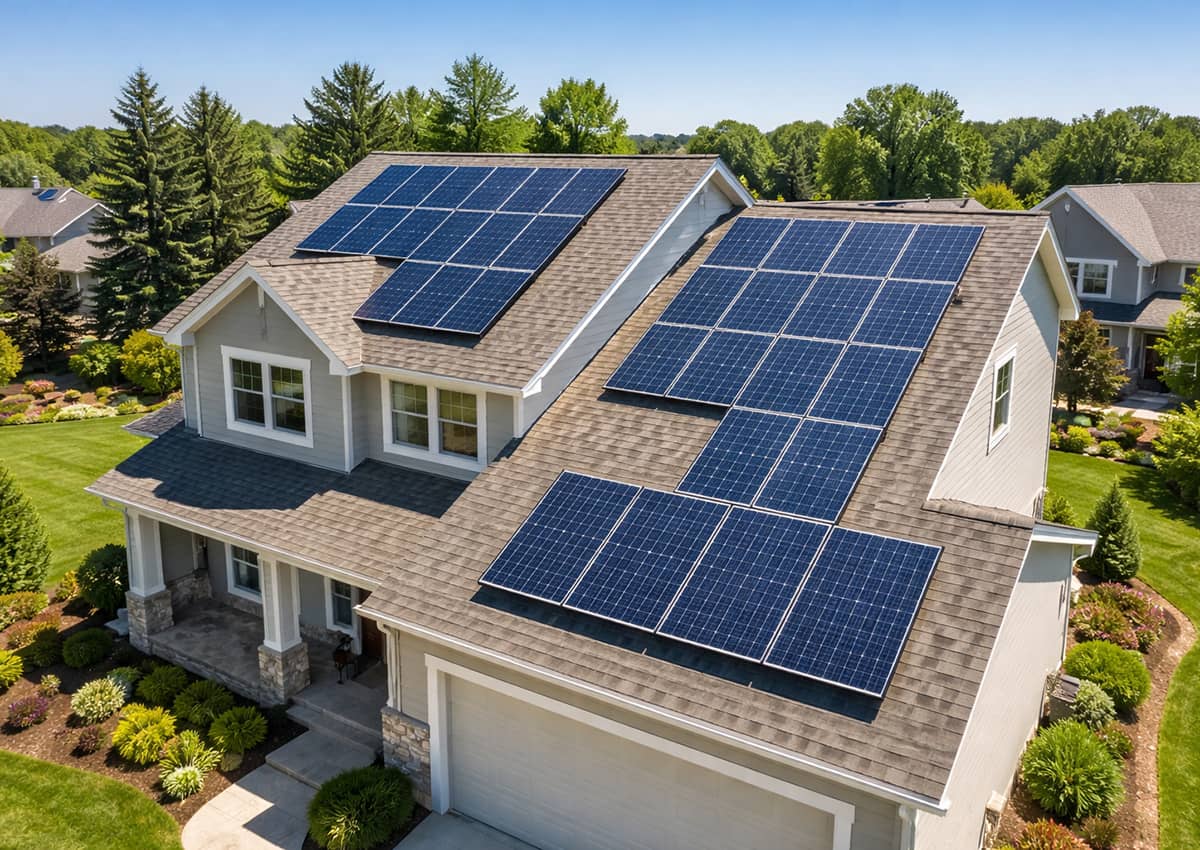
Installing solar panels in Maine comes with meaningful financial incentives that can lower your upfront costs significantly. Between available federal incentives, state programs, and utility rebates, the financial case for going solar has never been stronger.
State-level incentives in Maine are limited; the main savings levers here are net metering and ongoing electricity bill reductions rather than an upfront rebate or credit. A 30% federal credit remains available under Section 48E through a solar lease or PPA, claimed by the provider rather than by you, for systems placed in service by December 31, 2027. Systems you buy—including with a solar loan—no longer qualify for a federal credit.
But that's just the beginning. Maine offers Property tax exemption, and net metering policies lets you to earn credits for excess energy you send back to the grid. This guide breaks down every incentive offered to Maine homeowners in 2026.
Check if you qualify for $0-down solar in Maine
Get matched with vetted local installers. No obligation, free personalized quotes.
Key Takeaways
- 1State-level incentives in Maine are limited; the main savings levers here are net metering and property tax exemption.
- 2Maine offers Property tax exemption, providing supplemental savings from available incentives.
- 3Net metering in Maine allows you to bank excess energy and offset your bills year-round.
- 4With all incentives combined, most Maine systems become profitable in 6-8 years.
- 5Available incentive programs and local benefits may change over time—confirm current opportunities in Maine.
Maine State Solar Incentives
Maine offers multiple incentive programs that further reduce the cost of going solar. The primary state-level benefit is Property tax exemption.
Net Metering in Maine
Net metering is one of the most valuable ongoing benefits for solar owners in Maine. It allows you to send excess electricity your panels produce back to the grid in exchange for credits on your utility bill.
How net metering works:
- During sunny days, your panels often produce more electricity than your home uses—this excess flows back to the grid
- Your meter literally runs backward, crediting your account
- At night or on cloudy days when your panels produce less, you draw from the grid using your banked credits
- This effectively uses the grid as a free battery, maximizing your solar investment
Net metering in Maine:
Maine has favorable net metering policies. Most utilities in the state credit you at or near the full retail rate for excess electricity—meaning every kilowatt-hour you send to the grid offsets a kilowatt-hour you would otherwise buy at full price.
For a typical 8 kW system in Maine, net metering increases your annual savings by approximately $567-$945 compared to a scenario without net metering.
Pro tip: Net metering policies can change. Installing solar now locks you into current favorable rates under grandfather clauses, even if policies become less generous in the future.
Maximizing Incentives with Smart Financing
How you finance your solar system determines which incentives you can claim. The 30% federal tax credit no longer applies to any system you own—whether paid for in cash or with a solar loan. It remains available only through a lease or PPA, where the provider claims it, not you.
Cash Purchase
Paying cash means you own the system outright from day one and qualify for any state or local programs Maine offers—but not the 30% federal credit, which no longer applies to purchased systems.
- Pros: Highest lifetime savings, no interest charges, immediate ownership
- Cons: Requires significant upfront capital ($24k-$31k for most systems); no federal tax credit
Solar Loans
Solar loans let you own the system while spreading payments over 5-25 years. Because you own the system just as with a cash purchase, the federal tax credit does not apply, though you may still qualify for state or local programs. Many Maine homeowners find their loan payment is equal to or less than their previous electric bill, meaning they save money from month one.
- Pros: No upfront cost, builds home equity, may qualify for state incentives
- Cons: Interest charges reduce overall savings; no federal tax credit since you own the system
Solar Leases and PPAs
With a lease or Power Purchase Agreement, you don't own the system—a solar company does. That company claims the 30% federal tax credit under Section 48E and typically passes some of that value to you through a lower monthly payment or discounted electricity rate. This is currently the only way a residential customer benefits from the 30% federal credit, since it no longer applies to systems you own.
- Pros: $0 down, no maintenance responsibility, predictable costs, indirect access to the federal credit via the provider
- Cons: You don't own the system, lower lifetime savings, may complicate home sales
Ownership (cash or loan) still tends to deliver better long-term value than leasing in most cases—not because of the federal credit, which no longer applies either way, but because you keep 100% of the electricity savings and any home value increase instead of sharing them with a third-party owner. Run the numbers for your specific situation, since local electricity rates and lease terms vary.
Future Changes to Solar Incentives
Solar incentives have evolved significantly over the past decade, and they'll continue to change:
State Policy Changes
Maine solar policies can change over time. Net metering rates, state tax credits, and utility rebate programs are all subject to legislative and regulatory changes.
The good news: most policy changes include grandfather clauses that protect existing solar owners. Installing now typically locks you into current favorable rates and policies, even if they become less generous for future installations.
The Bottom Line on Timing
The 30% federal tax credit for purchased systems expired after 2025, and it's unclear whether it will return. What remains in Maine is a state incentive program and favorable net metering, which still make solar a reasonable investment for many homeowners—just without the federal boost that used to apply to purchases.
Solar Loan vs Lease vs PPA: Quick Comparison
| Feature | Cash Purchase | Solar Loan | Lease or PPA |
|---|---|---|---|
| Who owns the system | You | You | The provider |
| Upfront cost | Full system cost | $0 | $0 |
| Federal tax credit | None (25D expired) | None (you own the system) | 30% via Section 48E, claimed by the provider and passed through as a lower rate |
| State/local incentives | Varies by provider and contract | ||
| Monthly payment | None | Loan payment, typically less than your electric bill | Fixed lease fee or per-kWh PPA rate |
| Long-term savings | Highest once paid off | High once paid off | Lower than owning, but no upfront cost |
Ready to see your savings potential?
Get a free, no-obligation quote from top-rated installers in Maine.
The Bottom Line
- "Free" solar panels aren't technically free, but $0-down options make solar accessible without upfront costs
- Maine homeowners may still save with state incentives and net metering, and can access the 30% federal tax credit indirectly through a solar lease or PPA
- Compare multiple quotes to find the best deal for your specific situation
Frequently Asked Questions
Sources & References
You May Also Like
Free Solar Panels in Maine
Learn about $0-down solar options and financing programs.
Cost of Solar Panels in Maine
See current pricing and ROI calculations for your area.
Maine Solar Financing Options
Compare loans, leases, and PPAs to find the best fit.
Maine Solar Guides
Browse every guide for costs, incentives, financing, and top companies.